







As Namibia’s urbanization accelerates and its economy grows, the country faces a pressing challenge: managing increasing volumes of waste, including construction and demolition (C&D) waste, municipal solid waste (MSW), and industrial by-products. Rapid urban development, infrastructure projects, and population growth have led to rising waste generation, straining existing landfills and posing environmental risks—such as soil and water pollution, and habitat destruction—in Namibia’s fragile ecosystems. At the same time, businesses and local governments are seeking smarter, more sustainable approaches to waste management that not only reduce environmental impact but also unlock economic value from discarded materials. DongMeng, a global leader in environmental technology solutions, has tailored integrated waste management systems for Namibia, combining efficient processing equipment, resource recycling technology, and smart operation models to deliver "cleaner cities" and "smarter business" outcomes—paving the way for a sustainable future.
Integrated Waste Processing Systems: Turning Waste into Valuable Resources
Namibia’s waste stream is diverse, with C&D waste (concrete, bricks, asphalt) and MSW (organic matter, plastics, paper) accounting for the largest shares. DongMeng’s integrated waste processing systems are designed to handle this diversity, separating, sorting, and processing waste into reusable resources—reducing landfill reliance and creating economic value.
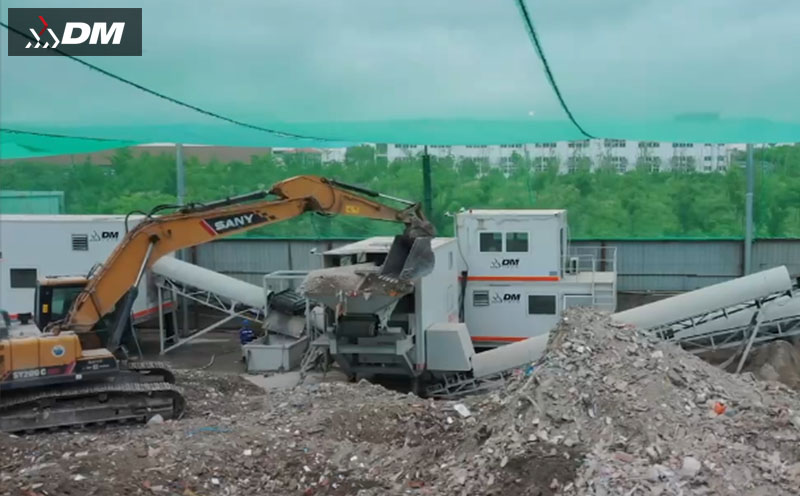
For C&D waste, DongMeng’s mobile and fixed waste recycling plants feature a multi-stage processing workflow: First, a primary crusher breaks down large waste chunks (up to 1000mm) into smaller fragments; then, a vibrating screen separates soil, sand, and other impurities; next, a secondary impact crusher refines the material into graded aggregates (5-40mm); finally, a magnetic separator and air separator remove metal and plastic contaminants. The resulting recycled aggregates meet Namibia’s construction standards, serving as substitutes for natural stone in road bases, concrete mixing, and building construction. A single plant can process 50-300 tons of C&D waste per hour, with a resource recovery rate of over 95%—turning waste that would otherwise occupy landfills into high-value construction materials. For example, a DongMeng waste recycling plant in Windhoek processes 80,000 tons of C&D waste annually, supplying recycled aggregates to local road projects and reducing the need for natural stone mining by 60,000 tons per year.
For MSW, DongMeng’s integrated processing systems combine mechanical sorting, organic composting, and waste-to-energy (WtE) technology. Mechanical sorting equipment uses screens, air separators, and magnetic separators to separate recyclables (plastics, metals, paper) from organic waste and inert materials. Organic waste is processed into high-quality compost through aerobic fermentation, suitable for agricultural use in Namibia’s arid regions—improving soil fertility and reducing chemical fertilizer reliance. Inert materials (glass, ceramics) are crushed into aggregates for road construction, while non-recyclable combustible waste is sent to WtE facilities to generate electricity, with flue gas treated to meet strict environmental standards. This multi-path processing model achieves a MSW resource utilization rate of over 85%, minimizing landfill volume and creating circular economic value.
Flexible & Adaptive Equipment: Meeting Namibia's Diverse Needs
Namibia’s urban and rural areas face distinct waste management challenges: Cities like Windhoek and Walvis Bay generate large volumes of concentrated waste, while remote towns have scattered waste sources and limited infrastructure. DongMeng’s equipment portfolio—combining mobile, semi-mobile, and fixed systems—offers flexible solutions tailored to these diverse needs.
Mobile waste recycling plants are ideal for scattered waste sources or temporary projects (e.g., post-construction waste processing). Equipped with tracked chassis, these plants can be quickly deployed to waste generation sites, processing waste on-site and eliminating long-distance transportation costs. They require no complex foundation or infrastructure, with setup time reduced to 2-4 hours, and can process 50-150 tons of waste per hour. For large-scale, centralized waste management in cities, DongMeng’s fixed waste processing complexes feature high-capacity equipment (200-500 tons/hour) and automated sorting systems, enabling efficient handling of large waste volumes. Semi-mobile systems, meanwhile, balance mobility and capacity—suitable for medium-sized towns with moderate waste generation, offering the flexibility to relocate as needed while maintaining high processing efficiency.
All equipment is engineered to adapt to Namibia’s harsh operating conditions: High-temperature resistant components and dust-proof enclosures protect against desert heat and sandstorms; energy-efficient engines reduce fuel consumption by 15-20% compared to conventional equipment; and low-water design minimizes water usage—critical for arid regions. The modular design of the equipment allows for easy expansion or modification, enabling local governments and businesses to scale their waste management capacity as needs grow.
Smart Operation & Management: Driving Efficient & Transparent Practices
Effective waste management requires not just advanced equipment, but also smart operation and management systems to optimize processes, reduce costs, and ensure transparency. DongMeng’s smart waste management platform integrates IoT (Internet of Things) technology, data analytics, and cloud computing to deliver end-to-end visibility and control.
IoT sensors installed on processing equipment monitor key parameters (processing capacity, energy consumption, component status) in real time, transmitting data to a centralized cloud platform. Operators can remotely track equipment performance, receive automatic fault alerts, and optimize processing parameters—reducing downtime by 30% and improving operational efficiency. The platform also integrates waste collection data, with GPS-tracked collection vehicles sending real-time location and load information. This enables dynamic route planning, minimizing fuel consumption and collection time, and ensuring timely waste pickup from residential and commercial areas.
For businesses and local governments, the platform provides detailed data analytics, including waste composition, resource recovery rates, and cost breakdowns. This data supports data-driven decision-making—such as adjusting recycling strategies based on waste composition changes or optimizing resource allocation to reduce operational costs. Additionally, the platform offers transparent reporting functions, enabling compliance with Namibia’s environmental regulations and facilitating stakeholder communication (e.g., sharing recycling achievements with the public or reporting to regulatory authorities).
Environmental Compliance & Sustainable Impact: Protecting Namibia's Ecosystems
Namibia’s commitment to environmental protection—rooted in its rich biodiversity and fragile desert ecosystems—demands waste management solutions that minimize environmental impact. DongMeng’s waste solutions are designed to meet the country’s strict environmental standards, delivering both immediate and long-term sustainable benefits.
Air pollution control is a key focus: All processing equipment is equipped with high-efficiency dust collectors (pulse bag filters or electrostatic precipitators) with a dust removal efficiency of ≥99.8%, reducing dust emissions to ≤5mg/m³—well below Namibia’s national limit of 15mg/m³. WtE facilities feature advanced flue gas treatment systems (denitrification, desulfurization, and activated carbon adsorption) to remove harmful pollutants, ensuring emissions comply with international standards. Noise pollution is controlled through sound insulation covers and low-noise motors, with operating noise kept below 75dB(A) at 10 meters—suitable for urban and residential areas.
Water conservation is another critical advantage: DongMeng’s waste processing systems adopt closed-loop water circulation technology, with water recycling rates of over 90% for dust suppression and equipment cooling—minimizing reliance on scarce groundwater resources. Organic waste composting reduces methane emissions from landfills (a potent greenhouse gas), while recycled aggregates reduce the environmental impact of natural stone mining—protecting habitats and reducing soil erosion. Over the long term, these solutions contribute to Namibia’s climate goals by reducing carbon emissions and promoting a circular economy.
From Windhoek’s urban construction sites to small-town waste collection points, DongMeng’s waste solutions are transforming Namibia’s approach to waste management—turning a pressing environmental challenge into an opportunity for cleaner cities and smarter business. By unlocking the value of waste through recycling, delivering flexible and efficient processing equipment, and enabling smart operation, DongMeng is supporting local governments in building sustainable urban environments and helping businesses reduce costs and enhance their environmental credentials. As Namibia continues to pursue sustainable development, DongMeng remains committed to innovating its waste solutions—integrating advanced technologies such as AI-based sorting and renewable energy integration—to deliver even greater environmental and economic value. Together, cleaner cities and smarter business practices are building a more sustainable, prosperous future for Namibia.
If you would like to get help immediately, you can also fill your requirements on the following form, we will contact you on the right time.


Get In Touch