







I. Namibia's "Scenario Test": The Diversity and Complexity of Crushing Needs
On Namibia's development blueprint, mining development and infrastructure expansion form a dual driving force: Open-pit mines in the northern copper belt require large-scale crushing of hard ores; uranium mines in the Namib Desert rely on low-consumption equipment to cope with water-scarce environments; road upgrading projects in Windhoek, the capital, urgently need nearby supply of high-quality aggregates; and livelihood housing construction in remote rural areas is eager for small crushing equipment that can be flexibly transferred. But behind these scenarios are differentiated extreme challenges: no stable power grid in remote mines, thin oxygen in high-altitude mining areas, dust concentration exceeding 50mg/m³ in desert construction sites, and millimeter-level aggregate particle size accuracy requirements in infrastructure sites.
Traditional single crushing equipment often "favors one over the other": A fixed crusher for an infrastructure project gave up aggregate supply orders for 3 remote villages due to inability to transfer; a small device in a gold mine cost over N$400,000 monthly for liner replacement due to insufficient wear resistance. Industry practice has long proven that in Namibia, "scenario adaptability" is more decisive for the success of crushing operations than single performance parameters. Only flexible and adjustable comprehensive solutions can meet diverse challenges.
II. Core Competitiveness: Dual Adaptation Logic of "Modularization + Customization"
Our crushing solutions, tailored for Namibia's diverse scenarios, take "modular combination to adapt to scenarios and customized upgrades to address challenges" as the core, building an adaptation system covering the entire field of "mines - infrastructure - livelihood". Their key advantages are reflected in three dimensions:
1. Modular Equipment Matrix: One Solution for Multiple Scenarios
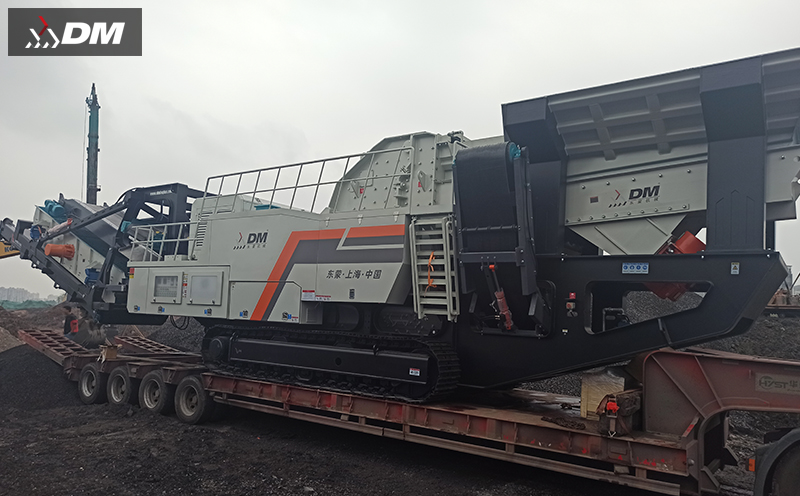
The solution builds three major equipment matrices of "mobile + fixed + small", achieving full scenario coverage through module combination: Crawler-mounted mobile crushing plants are equipped with foldable conveyor arms, weighing only 28 tons, which can be towed by pickup trucks for transfer, adapting to remote mines and scattered infrastructure projects. A single unit can crush 800 tons of aggregates daily, meeting the building material needs of 2,000 square meters of housing; Fixed crushing production lines adopt a three-stage module combination of "jaw crusher + cone crusher + screen", with a processing capacity of 2,000 tons/day, adapting to large-scale production in large open-pit mines; Small portable crushers weigh less than 5 tons, equipped with dual electric + diesel power, which can enter narrow rural construction sites for operation. The crushing particle size adjustment range is 0-50mm, adapting to the flexible needs of livelihood projects. In a comprehensive development project in Namibia, this matrix completed mine ore crushing, road aggregate processing and rural housing building material supply through module switching, with an equipment reuse rate of 90%.
2. Customized Technology Upgrades: Precisely Solving Scenario Pain Points
Targeted technology upgrade solutions are provided for extreme challenges in different scenarios: Remote off-grid mines are equipped with exclusive "solar + energy storage" power packs, which can convert solar energy into crushing power. The daily power generation meets 8 hours of continuous operation, completely breaking away from grid dependence; Desert area equipment is upgraded with "IP69K full sealing + dry dust removal" system, reducing dust intrusion rate by 99% and dust emission concentration to 8mg/m³, adapting to the environmental protection requirements of the Namib Desert; High-altitude mining area equipment is equipped with supercharged engines and cold-resistant hydraulic oil, which can still maintain 92% of the rated power in 1,800-meter altitude and -5℃ low-temperature environment; Infrastructure project equipment is equipped with laser particle size sensors to monitor aggregate particle size in real time, with a qualification rate stable above 98%, meeting the high-precision requirements of road paving. In the Windhoek road upgrading project, customized equipment reduced aggregate rework rate from 15% to 1%, shortening the construction period by 12 days.
3. Full-Cycle Service Guarantee: Adapting to the Entire Operation Link
The solution extends to the full cycle of "selection - operation and maintenance - recycling", lowering the threshold for scenario adaptation: In the early stage, on-site survey services are provided, and customized plans are issued based on ore hardness, infrastructure needs and environmental parameters. A copper mine project improved equipment investment return rate by 30% through precise selection; In the middle stage, a localized operation and maintenance center is established, with parts warehouses set up in Windhoek and Oshikoto Region, shortening the maintenance response time for remote mining areas to 6 hours; In the later stage, equipment renovation and recycling services are provided. Old equipment can be adapted to new scenarios through modular transformation, with residual value utilization rate increased to 65%. A mining company in Namibia reduced equipment failure downtime by 80% and operation and maintenance costs by 45% through full-cycle services.
III. Practical Implementation: An Adaptation Model Across Diverse Scenarios
In 2023, the crushing solution was introduced into three typical scenarios in Namibia, all achieving precise matching of "scenario - equipment - benefit":
- Remote gold mine in the Kalahari Desert: Adopting the combination of "mobile crushing plant + solar power pack", it achieved daily crushing of 600 tons of ore in an off-grid environment. The energy cost per ton was 60% lower than that of diesel drive, and the equipment transfer time was shortened to 2 hours, successfully serving 3 scattered mining sites;
- Windhoek Ring Road Project: Launched the customized plan of "fixed production line + particle size monitoring", controlling the aggregate particle size deviation within 2mm, increasing supply efficiency by 40%, helping the project open to traffic ahead of schedule and winning a special government award;
- Northern Rural Livelihood Housing Project: Deployed 10 small portable crushers, adapting to the needs of narrow construction sites and flexible transfer. A single unit served 5 villages, reducing aggregate supply costs by 35% and accelerating the completion of 120 housing units.
The person in charge of an infrastructure enterprise commented: "There is no 'standard scenario' in Namibia. This solution is like a 'Transformer' that can adjust its form according to the different needs of mines, roads and villages, and can solve the problems of no electricity and heavy dust. This is the equipment truly adapted to the local area."
IV. Scenario Adaptation Guide: Full-Field Application Solutions in Namibia
Combined with the characteristics of Namibia's core scenarios, precise matching of solutions must follow the following strategies:
1. Core Scenario Adaptation List
- Large open-pit mines (copper/uranium): Fixed three-stage crushing production line + wear-resistant liner upgrade + intelligent operation and maintenance system, adapting to large-scale and high-hardness crushing needs;
- Remote small mines (gold/gemstone): Crawler mobile crushing plant + solar energy storage power + quick transfer kit, adapting to scattered, off-grid and high-frequency transfer scenarios;
- Urban infrastructure (roads/buildings): Semi-mobile crushing plant + particle size monitoring system + low-noise design, adapting to high-precision, environmental protection and near-urban operation needs;
- Rural livelihood projects (housing/small roads): Small portable crusher + dual power system + lightweight design, adapting to flexible, narrow and low-capacity scenarios.
2. Adaptation Optimization Tips
- Scenario prediction and upgrade: Reserve equipment modular transformation interfaces in advance according to the mining cycle and infrastructure project progress to reduce later adaptation costs;
- Environmental linkage regulation: Adopt "sealing + supercharging" dual upgrades in the intersection of desert and high-altitude areas to resist both dust and low-oxygen challenges;
- Resource synergy utilization: Adjust the particle size of waste rock generated from mine crushing through equipment for infrastructure aggregates, realizing "one material, dual use" and improving resource efficiency.
Conclusion
Namibia's development scenarios have never been a "single template". From the dusty desert mines to the precision requirements of urban infrastructure, from the energy dilemma of remote mining areas to the transfer needs of rural construction sites, every place tests the adaptability of crushing solutions. Our solution breaks the scenario boundary with a modular matrix, solves extreme challenges with customized upgrades, and lowers the operation threshold with full-cycle services, transforming "scenario limitations" into "adaptation advantages". From the roaring operations in the northern copper belt to the road paving in Windhoek, from the desert mining sites in the Kalahari to the rural housing construction, this solution is becoming the "best partner" for Namibia's diverse development needs with its "flexible and changeable" form and "excellent" performance. Choosing a crushing solution truly adapted to the local area can transcend scenario differences and inject precise and efficient power into every development undertaking.
If you would like to get help immediately, you can also fill your requirements on the following form, we will contact you on the right time.


Get In Touch