







I. The "Survival Limit" of Namibian Desert Mines: Three Insurmountable Tests for Equipment
Namibia boasts Africa's richest uranium, diamond, and gold resources, with 80% of its mining areas distributed in the Namib Desert and Kalahari Desert zones. But this "resource-rich land" is a "hell" for equipment: there are over 150 days of sand and dust weather annually, and fine silica-rich dust (with 70% silica content) can penetrate ordinary sealing gaps, causing rapid abrasion of equipment components; annual precipitation is less than 200 mm, and water scarcity is common in mining areas, making traditional wet dust removal and equipment cooling systems ineffective; daytime temperatures in summer often exceed 40°C, and high surface temperatures accelerate lubricating oil failure and circuit aging.
Operational data from a uranium mine is alarming: in 2022, the traditional crushers used required bearing replacements three times a month due to sand abrasion; cooling failures caused by water scarcity led to an average of 45 hours of monthly downtime; the annual maintenance cost per unit exceeded N$1.2 million; and the mine's production capacity only reached 60% of the designed value. The industry consensus has been formed: in Namibia, the "desert condition tolerance" of crushers directly determines the continuous production capacity and profitability of mines.
II. Core Breakthroughs: "Triple Reinforced Design" for Desert Conditions
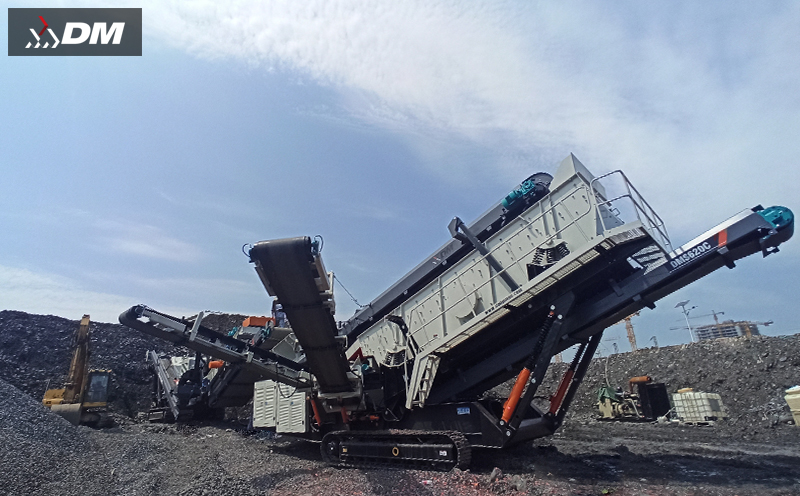
Our crushers, custom-built for Namibian desert mines, take "dust and wear resistance, drought and water saving, and heat resistance and stability" as the core. Through eight technological innovations, they achieve continuous operation in extreme environments. Their key advantages are reflected in three systems:
1. All-Dimensional Dust and Wear Resistance System: Defying Sand Erosion
Targeting high-concentration sand and dust, the equipment adopts a dual dust-resistant structure of "active defense + passive protection": Core component bearings feature a "four-stage sealing" design—equipped with lip seals, labyrinth dust covers, silicon carbide wear rings, and high-pressure grease barriers in sequence—reducing dust intrusion rate by 99.5% and extending bearing life from 1 month (traditional equipment) to 8 months; the electrical system uses an IP69K dust-proof housing with a built-in hot air circulation dust removal device, which can maintain unobstructed circuits in environments with 50mg/m³ dust concentration; crushing chamber liners are made of "high-chromium alloy + tungsten carbide composite material" with a surface hardness of HRC70, whose sand and dust abrasion resistance is 4 times higher than ordinary materials, extending service life to 120 days. In field tests at a gold mine in the Namib Desert, the equipment operated for 3 consecutive months without dust-related failures, and wear part replacement costs were reduced by 70%.
2. Drought and Water-Saving Design: Adapting to Extreme Water-Scarce Environments
To solve the water scarcity problem, the equipment adopts an integrated "dry sand making + high-efficiency water-saving cooling" scheme: Abandoning traditional wet dust removal, it uses a "negative pressure dust suction + filter cartridge filtration" dry dust removal system, with dust emission concentration as low as 8mg/m³ (far below Namibia's environmental protection standards) and no water consumption throughout the process—only requiring filter cartridge replacement every two weeks for continuous operation; the cooling system adopts an "air cooling + waste heat recovery" design, where high-temperature gas discharged by the engine drives a turbine cooler to force-cool hydraulic oil and lubricating oil, increasing cooling efficiency by 50%. Daily water consumption is reduced from 200 liters (traditional equipment) to 15 liters, only used for emergency cooling of key components. At a water-scarce mining area in the Kalahari Desert, the equipment can achieve 24-hour continuous production with only a small water storage tank.
3. High-Temperature Adaptive System: Stable Operation Under Scorching Heat
To cope with desert high temperatures, the equipment builds a protection network of "intelligent temperature control + heat-resistant materials": The engine is equipped with a variable-speed cooling fan that automatically adjusts speed according to ambient temperature, maintaining 98% of the rated power at 45°C; the hydraulic system uses high-temperature resistant and wear-resistant hydraulic oil (suitable for temperatures from -20°C to 100°C), with aluminum cooling fins installed outside the oil tank, and a forced cooling device linked with temperature sensors, which can stably control oil temperature within 65°C; the equipment frame and crushing chamber are cast with heat-resistant alloy steel, without deformation or cracking at 55°C surface temperature, and welds are filled with high-temperature resistant sealant to avoid gap dust leakage caused by thermal expansion and contraction. During summer construction at 42°C near Windhoek, the equipment achieved an average daily effective operating time of 23 hours, with a high-temperature failure rate of only 0.5%.
III. Practical Verification: "Continuous Operation Revolution" in Desert Mines
In 2023, a large Namibian uranium mine introduced 10 units of this custom crusher, replacing the original traditional equipment, achieving subversive improvements in production efficiency and operating costs:
- The average equipment failure rate decreased from 40% to 2%; monthly average downtime was reduced from 45 hours to 3 hours; the mine's uranium ore processing capacity increased from 80,000 tons per month to 140,000 tons, with a production capacity compliance rate of 98%;
- Monthly average replacement cost of wear parts decreased from N$900,000 to N$220,000; maintenance labor costs were reduced by 65%; water-saving modifications reduced the mine's water supply cost by N$400,000 per year;
- Losses from production interruptions caused by equipment failures decreased from N$1.8 million per month to zero; the mine's annual net profit increased by over N$12 million;
- The equipment set a record of 62 consecutive days of operation, breaking the mine's previous record of 30 consecutive days.
The uranium mine's operations director stated: "In Namibian mines, the biggest competitiveness is equipment that can 'keep running'. This set of crushers is not afraid of sand and dust, does not require large amounts of water, and can withstand high temperatures. It has finally freed us from the passive situation of 'depending on the weather'."
IV. Adaptation and Maintenance Guide for Namibian Desert Mines
Combined with the working condition differences of different desert mining areas in Namibia, precise planning is required to maximize the continuous operation capacity of equipment:
1. Working Condition Adaptation Selection Recommendations
- High-dust uranium/gold mines (e.g., Namib Desert): Prioritize crawler-type dust-resistant reinforced crushers, equipped with four-stage sealed bearings and dry dust removal systems to resist extreme sand and dust;
- Extremely water-scarce mining areas (e.g., Kalahari Desert hinterland): Select fully dry crushing plants paired with air cooling systems to completely break away from reliance on water resources;
- High-temperature and high-altitude mining areas (e.g., Central Highlands): Choose plateau-type high-temperature adaptive crushers equipped with enhanced heat dissipation modules and plateau engines.
2. Localized Maintenance Tips
- Special maintenance during sand and dust season: Conduct comprehensive inspections of seals and dust filter cartridges weekly; disassemble and clean the heat dissipation system monthly; replace high-pressure sealing grease quarterly;
- Water-saving management strategy: Establish a water resource recycling system to collect and treat equipment cooling wastewater for emergency cooling, further reducing water consumption;
- Intelligent early warning linkage: Rely on the equipment's built-in IoT system to real-time monitor parameters such as bearing temperature and sealing pressure, predict failure risks 48 hours in advance, and achieve preventive maintenance.
Conclusion
Namibia's desert mines hold immense resources, but the extreme conditions have previously thwarted countless operations. Our specially engineered crushers, featuring comprehensive dust and wear resistance systems to combat sandstorms, drought-resistant and water-saving designs to address water shortages, and high-temperature adaptive systems to overcome scorching heat, transform the desert's destructive nature into a stabilizing factor in production. From uranium mines in the Namib Desert to gold mines in the Kalahari, this equipment, with a 99% availability rate, proves that conquering Namibia's desert mines eliminates the need to choose between environmental compromise and stable production capacity. Choosing a crusher truly suited to desert conditions allows mines to operate sustainably amidst dust and drought, transforming resource potential into tangible, profitable results.
If you would like to get help immediately, you can also fill your requirements on the following form, we will contact you on the right time.


Get In Touch